


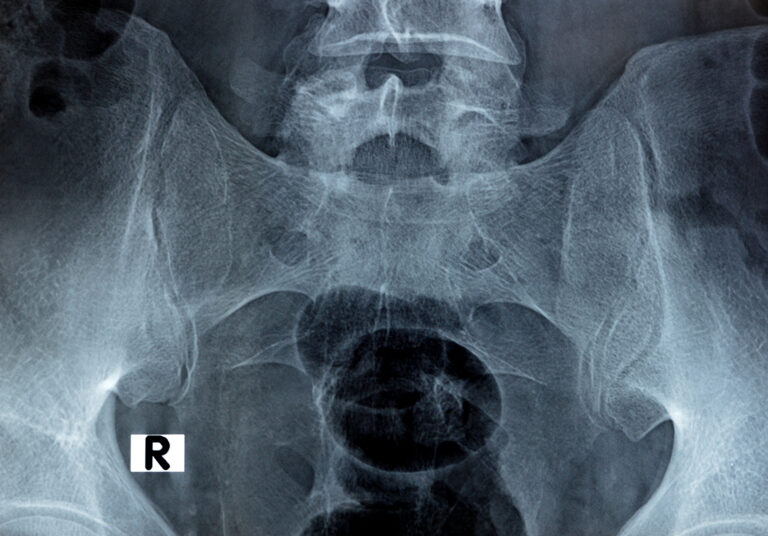
An often overlooked cause of chronic back pain
In a significant percentage of patients with chronic low back pain (15 to 30%), the source of pain may be the sacroiliac joint. It is still an underdiagnosed but clinically relevant cause, especially after lumbar surgery, pregnancy, or in those who perform repetitive movements (athletes, manual laborers).
What is the sacroiliac joint?
It is a large joint that connects the base of the spine (sacrum) to the pelvis (iliac bone). Its mobility is minimal, but it plays a crucial role in transferring body weight to the legs.
What are the typical symptoms?
- Pain in the lower back, often on one side
- Irradiation to the buttocks, groin, or back of the thigh
- Pain that worsens when standing, walking for long periods, or climbing stairs
- Often improvement when sitting or leaning forward
- Often improvement when sitting or leaning forward
How is the diagnosis made?
The diagnosis is based on:
- Thorough clinical examination with provocative tests
- Diagnostic infiltration: Under radiological guidance, an anesthetic is injected into the SIJ. If the pain disappears, the diagnosis is confirmed.
- MRI or CT scan: these are used more to rule out other conditions than to confirm sacroiliac syndrome, as imaging tests are often normal.
What treatments are available?
Conservative treatment
- Specific physical therapy (coordination, strength, posture)
- Selected manual therapies, only if supported by clinical evidence
However, numerous studies show that effectiveness is often limited in time, especially in chronic cases.
Infiltrations
- Intra- or peri-articular injection with cortisone and anesthetic
- They can offer relief for weeks or months.
Radiofrequency of the sacral nerve branches
- Denervation of the nerves that transmit pain
- Minimally invasive procedure, performed under local anesthesia
- Documented improvement in multiple randomized clinical trials (RCTs)
- Temporary but repeatable effect (average duration: 6–12 months)
In summary
- Sacroiliac pain is a common but often overlooked cause of low back pain.
- The diagnosis is based on clinical tests and targeted infiltrations.
- There are effective, minimally invasive treatment options available.