


Spinal cord neurostimulation is an innovative treatment for reducing chronic pain when other methods are not sufficient.
It involves sending small electrical impulses to the spinal cord to “block” pain signals reaching the brain.
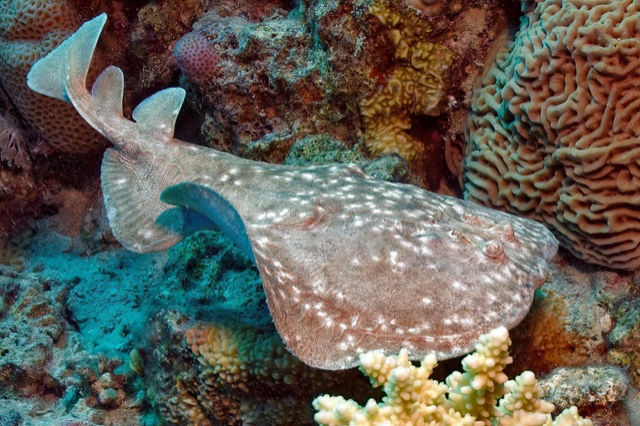
This technique is not entirely new: even in ancient Greece, doctors used electric shocks from torpedo rays, a type of electric fish, to relieve headaches and joint pain!
Today, thanks to modern technology, we can do this safely and accurately, helping many people to regain a more peaceful life.
How Does it Work?
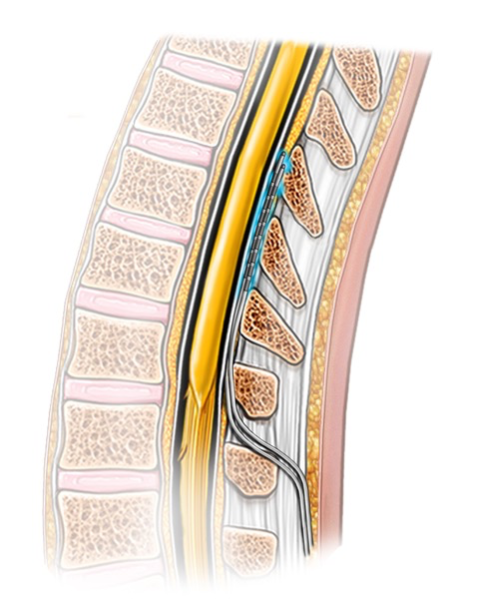
- A small electrode is inserted near the spinal cord, into the epidural space (the same space used for epidural anesthesia during childbirth).
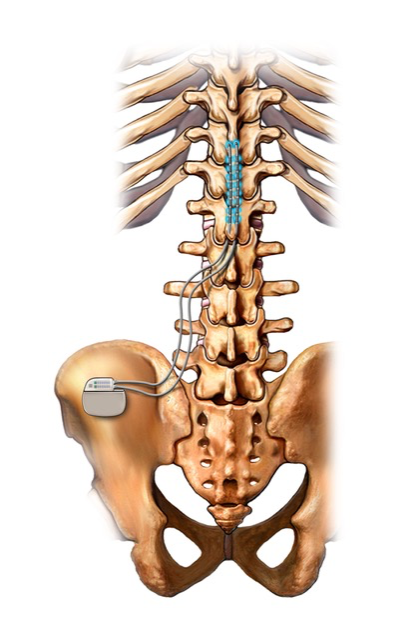
- The electrode is connected to a battery that generates electrical impulses.
- The pulses help reduce the perception of pain.
Can I benefit from neurostimulation?
Neurostimulation may be recommended if you suffer from chronic neuropathic pain that does not respond to other therapies. In particular, in the following cases:
- Chronic neuropathic pain after spinal surgery
- Peripheral nerve pain in the limbs (peripheral neuropathy or polyneuropathy)
- Chronic lower back pain resistant to conventional treatments
- Complex Regional Pain Syndrome (CRPS, Algodystrophy)
- Post-herpetic pain (persistent pain after shingles)
- Chronic pain after surgery (post-surgical pain)
- Phantom limb pain (pain after amputation)
If you have tried pharmacological treatments, injections, or physiotherapy without achieving sufficient improvement, neurostimulation might be a viable option for you.
How is the implant performed?
- The electrode is positioned using a minimally invasive procedure, using a special needle and under radiological guidance.
- After insertion, the electrode is secured to keep it stable.
- A trial phase is always conducted before the permanent implant.
The Trial Phase
- During a 1-2 week trial period, the electrode is connected to an external battery.
- The patient uses a small remote control to adjust the intensity of the stimulation.
- During the trial, several check-ups are scheduled at our center to adjust the stimulation.
- If the pain is reduced by at least 50%, we proceed with the permanent implantation of a battery under the skin, similar to a pacemaker.
- If the treatment doesn’t work, the electrode is simply removed.
The Permanent Implant
- If the trial is successful, a small battery is implanted under the skin (similar to a pacemaker).
- The battery can be positioned in the gluteal region or near the abdomen.
- The procedure takes about 1-2 hours and is performed as day surgery.
Are there Risks or Side Effects?
The procedure is minimally invasive. Side effects are rare but may include:
- Temporary pain or discomfort in the implant area
- Risks of infection
- Rarely, bleeding or nerve problems or injuries
- Possible electrode displacement
Since it’s an electronic device, although very rarely, there may be minor technical issues such as disconnection or movement of the electrodes.
In Summary
Neurostimulation can help you:
- Reduce chronic pain
- Sleep better
- Have a more active and serene life
- Reduce the use of pain medications
If you suffer from chronic pain resistant to treatments, contact us. We are here to help you regain well-being.